Eleven p.m. on June 20. Science says the Solstice is happening just now, the longest day of the year is ending, the shortest night is begun, the sun is moving into the part of the sky called Cancer.
It´s Midsummer Night, a time when the veil between this world and the next is particularly thin and the future can be divined using potato peels and still water and a correct repetition of rhymes. The Catholic calendar says this is the Feast of St. John, the patron of the
Templar Knights, and therefore also the pueblo fiesta in Terradillos de
Templarios, our neighbors three kilometers east.
In Moratinos this year, St. John´s Day meant a long, long stretch of daylight for working in. Up on the roof of the church tower the steeple-jacks shored-up the timbers, dropping adobe and terra-cotta onto the street and plaza below. A cloud of swallows whirled around them as they worked. Farmers toiled in their vegetable gardens. Pilgrims toiled down the trail. Thunderheads stacked up on the horizon, then blew on by. The grain waved gold, the sunflowers green in between, and soon -- God willing -- their thousands of bright yellow faces will open to the sky.
In the morning we walked in the woods outside Ledigos. We gathered butterfly lavender, local wildflowers that might propagate here in our garden. We drove to Leon, we had the car serviced, we looked at the staggering array of things for sale at the big department store, and for lunch we ate the strange Spanish take on Chinese food. We drove home down the strangely deserted autovia.
And at 10:45, as the sun finally set and the Solstice approached, I gathered up two dogs, a candle, and a glass jar. I drove through the sleeping town, past the albergue and hostal where the pilgrims were by then snoring, up the Camino past the cemetery, where the sleepers make no sound. I crossed the concrete bridge at the Rio Templarios, and stopped at the little grove called Villa Oreja.
It´s there, alongside the road, we keep a small labyrinth of stones. And yes, I confess, at the change of each season, every Solstice and Equinox, I go there with a dog or two and a candle. In the dark I walk the labyrinth, and I make a prayer.
I pray for everyone who walks past that place, and everyone who walks that labyrinth. I pray for Moratinos, and Terradillos, and my family and my friends, and for whatever is coming down the road toward us in the next three months.
I leave the candle out there, burning in the middle of the maze. (I am sure my neighbors think I am mad, but not in any harmful way.)
Tonight at 11 p.m. there still were scraps of light along the western horizon, a hot little spot of red where the sun had been. Rain sprinkled, but when I looked straight up from the center of the labyrinth, stars shone down on me.
Supposedly the spirits of Templar Knights pass by that place on St. John´s Eve, but I have never seen or heard them. Only hawks calling in the dark, or maybe an owl. Sometimes the breeze makes the trees roar overhead, and one of the dogs growls at something in the underbrush. Sometimes it gets creepy out there.
But not in summertime. The night is soft in June. Glorious, soft, and bright with the last scraps of sun -- the very peak of the year.

Thursday, 21 June 2012


Monday, 18 June 2012
Heavy air
The air is heavy.
To our north the miners are rioting, throwing coal-cars onto the highways. In the cities tomorrow the unemployed and annoyed plan to rally, hoping that marching around the plaza and shouting might somehow lighten their burdens or brighten their futures.
To the east, in Greece, the economy totters and reels. Here in Spain, the timbers are shivering at the banks -- or so we are told. (So far, being even a shaky bank is a lot more fiscally safe than being a regular person. The government believes in shoring up even the most rapacious bankers, while leaving the regular folks to "practice austerity for our country´s sake.") I may be thrown off the free medical care gravy train at any time. I´ve had a good ride.
In America the Vatican is cracking down on nuns who do not toe the company line. In the Vatican itself police are uncovering a web of "dirty money" accounts used by the Mafia to sanctify their ill-gotten lucre.
In England, Princess Kate strapped on her $500 boots and went camping. Queen Elizabeth II celebrated herself with a huge street party, and millions of flag-waving commoners turned out to cheer for their best-beloved billionaire. European Cup football fills flat-screens in a million bars as the sports fans double-down on anesthesia. There´s so much ache that wants treatment, so much angst, so little work to be had, and so much merchandise they just gotta have if they want to be worthwhile.
Here in Moratinos Tim and Harry are having stomach trouble, probably from drinking water from ditches alongside chemically-treated fields. So far there´s no talk of opening the church this July so the pilgrims can stop in. Kim´s gone home to Florida. Paddy´s online horse-betting career is over, a victim of Spanish tax law. Having family members ship us low-cost goodies from America is now off, because the customs people are enforcing the import duty laws. No more powdered-sugar and cornmeal and hiking boot shipments, alas! Release of the paperback version of "The Moorish Whore" is delayed. I want to write another book, but I wonder if it´s worth all the trouble getting it out there. I wonder if I can afford to be a book publisher.
Should we get all our Euros out of the bank? Should we turn them all into pounds, or dollars? Should we hide all our silver in the bodega, buy more chickens, plant more lettuce, string up barbed wire?
Even with so much mayhem going on, the pilgrims keep coming. On bicycles, on foot, some with donkeys and some with little children. They still need food and shelter and company. Some of them still leave us money, some still want to become volunteers themselves. They talk about love and unity and kindness. Tonight they are a young French girl and a young Quebecois Canadian man. They have walked here from Luzerne, in Switzerland. Both believe they will find jobs when they finish here and head home. They are full of confidence. They will find something, they say.
Everybody´s looking for something. No one is really sure what it is. We keep living the way we always do, but the ground feels slippery underfoot. The air feels heavy.
To our north the miners are rioting, throwing coal-cars onto the highways. In the cities tomorrow the unemployed and annoyed plan to rally, hoping that marching around the plaza and shouting might somehow lighten their burdens or brighten their futures.
To the east, in Greece, the economy totters and reels. Here in Spain, the timbers are shivering at the banks -- or so we are told. (So far, being even a shaky bank is a lot more fiscally safe than being a regular person. The government believes in shoring up even the most rapacious bankers, while leaving the regular folks to "practice austerity for our country´s sake.") I may be thrown off the free medical care gravy train at any time. I´ve had a good ride.
In America the Vatican is cracking down on nuns who do not toe the company line. In the Vatican itself police are uncovering a web of "dirty money" accounts used by the Mafia to sanctify their ill-gotten lucre.
In England, Princess Kate strapped on her $500 boots and went camping. Queen Elizabeth II celebrated herself with a huge street party, and millions of flag-waving commoners turned out to cheer for their best-beloved billionaire. European Cup football fills flat-screens in a million bars as the sports fans double-down on anesthesia. There´s so much ache that wants treatment, so much angst, so little work to be had, and so much merchandise they just gotta have if they want to be worthwhile.
Here in Moratinos Tim and Harry are having stomach trouble, probably from drinking water from ditches alongside chemically-treated fields. So far there´s no talk of opening the church this July so the pilgrims can stop in. Kim´s gone home to Florida. Paddy´s online horse-betting career is over, a victim of Spanish tax law. Having family members ship us low-cost goodies from America is now off, because the customs people are enforcing the import duty laws. No more powdered-sugar and cornmeal and hiking boot shipments, alas! Release of the paperback version of "The Moorish Whore" is delayed. I want to write another book, but I wonder if it´s worth all the trouble getting it out there. I wonder if I can afford to be a book publisher.
Should we get all our Euros out of the bank? Should we turn them all into pounds, or dollars? Should we hide all our silver in the bodega, buy more chickens, plant more lettuce, string up barbed wire?
Even with so much mayhem going on, the pilgrims keep coming. On bicycles, on foot, some with donkeys and some with little children. They still need food and shelter and company. Some of them still leave us money, some still want to become volunteers themselves. They talk about love and unity and kindness. Tonight they are a young French girl and a young Quebecois Canadian man. They have walked here from Luzerne, in Switzerland. Both believe they will find jobs when they finish here and head home. They are full of confidence. They will find something, they say.
Everybody´s looking for something. No one is really sure what it is. We keep living the way we always do, but the ground feels slippery underfoot. The air feels heavy.
Monday, 11 June 2012
Before and After
 |
| BEFORE: looking out the front door |
 |
| BEFORE: View from the front gate |
 |
| BEFORE: Looking left from the gate, w/trough |
 |
| DURING: tree and arch are no more |
 |
| DURING: aaaaauuuughh! |
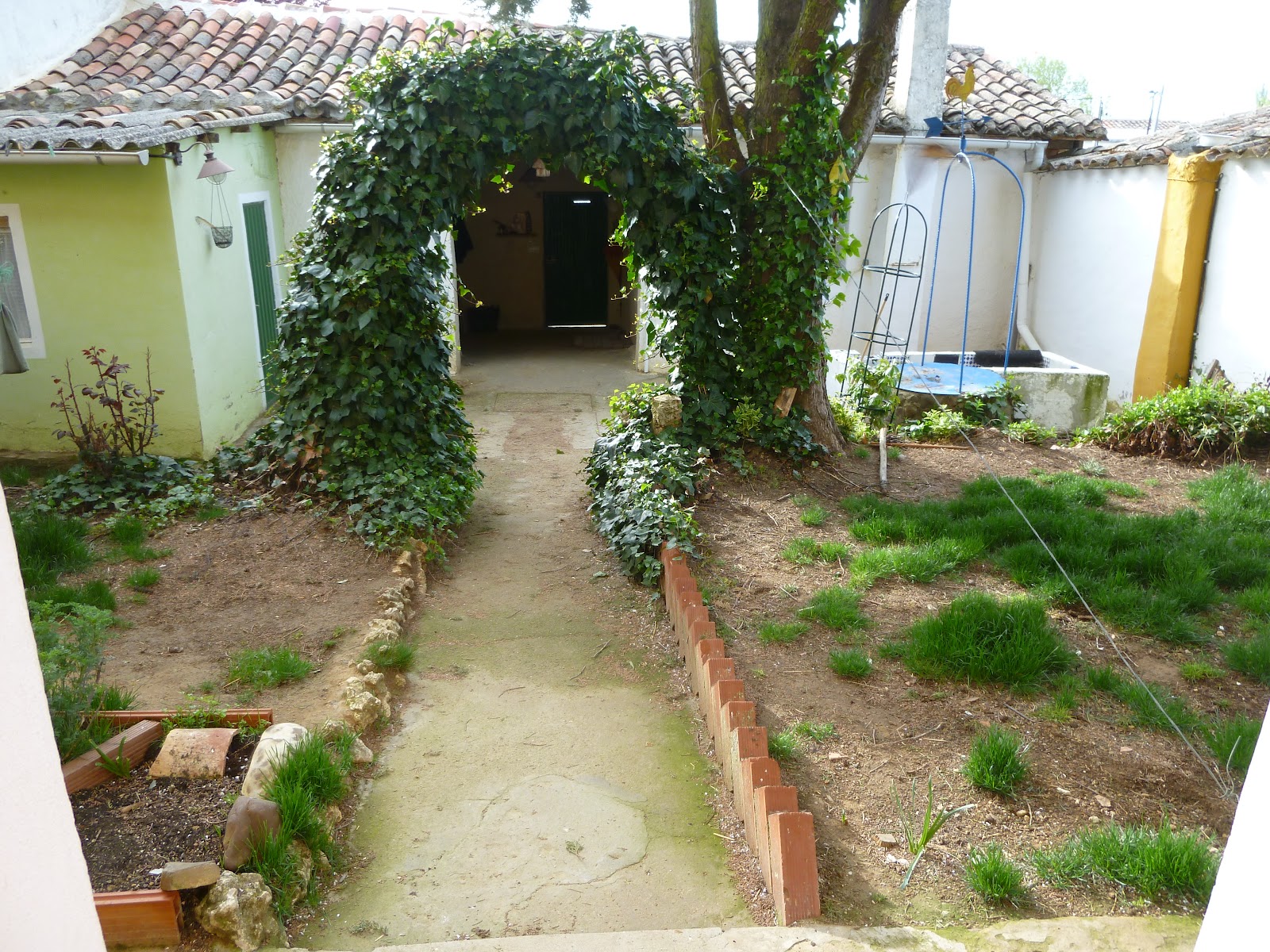
When I returned home it was gone. The trees, the rose bushes, the lawn, the sidewalk, the trough... cut down, demolished, and hauled off. We now have a spectacular sweep of biscuit-colored earthen tiles, terraced on two levels, with much more modern drainage. The little olive tree still stands bravely in its own square of dirt -- Paddy insisted that remain undisturbed. Three more slots were left for planting something in. It´s a lot less dirt than I´d specified when I talked to the builder.
It´s my fault, some of it. I went away and left the job in other hands. I wasn´t here to tell them otherwise. So I got the "garden" the builder wanted -- a blast of right angles and hard sunlight. It´s new and clean and shiny. We had to immediately start painting the surrounding walls, which suddenly became a gallery of five years´ worth of grubby.
Of all the things that went, I especially mourn the passing of the ivy arch. I loved that arch. It was the first thing I saw when I first walked into the gate of the Peaceable. It was sweet and rustic and alive all the year ´round, and now it is history.
 |
| AFTER: View out the front door |
 |
| AFTER: View from the front gate |
 | ||
| AFTER: Well still is there, but no trough or tree! |
But there is an iron structure to support a vine. And I do have long, wide flowerbeds to work with. So we set out to soften the hard angles. I planted three kinds of lavender and several kinds of herbs, and put a healthy jasmine in a huge pot beside the vine-arbor. (Now if I could convince the dogs to not sleep on them...)
We put the outside dining table up near the front door, and when the parasol is up and the table is set it is a jolly sight. I climbed up onto the roof and put the new chimney-pot on top, a capriccio from southern Portugal. It is crooked, but it is now set in concrete. We painted the chimney-piece ochre. It looks very nice. Paddy painted the mint-green potting-shed a deep Greek blue.
It´s going to be all right, I tell myself. We just need to sit with this a little while, and freshen up the paint, and get some plants growing. Next year, maybe, add a small fountain. A wall painted with an Abstract Expressionist thingy. Some ivy. Some birdsong.
The sky is very blue these days, and with the spruce gone we can see much more sky, night and day. The birds are not gone far. We have another big spruce out back.
We have a house, after all. It is paid-for. We are happy, and relatively healthy. Life is very good to us.
The poppies bloom madly. The rye and oat fields are turning gold. The air is sweet with new-cut alfalfa. The guitarists are back, filling the churches with music, and Kim Herself is here, shimmering, if only for a couple of days.
Nothing lasts. Everything changes. This, too, shall pass.
 | |||
| Portuguese chimney-pot, Castillian ochre |
 |
| Harry among the flowers |
Monday, 4 June 2012
Kim´s Tribute
If you have read this blog for any time
at all, you will know who Kim is. Kim is a free spirit from Key West, Florida.
She blew in here on a breeze one day, and came and went a few times, and
stayed for a good long time, and made many good things possible. (including Rosie Dog, the design of this blog, the cover of the Moorish Whore, even our business cards.)
The critters love her. She is like a
sister to me. Paddy, who does not come easy to sweetness, says Kim is
"the daughter I never had."
We have not seen Kim for a few months.
She is out there somewhere on the trail, and once in a while I see a
blog post or a Facebook update that hints at which backwater she´s
exploring. I can tell she is nearer now than she was before. So maybe
she will show up again soon, and all the dogs will rejoice, and Murphy
will snuggle up against her and purr. (Momo will probably climb up her
pantleg, needling her legs with his tiny claws, and make her scream.)
Kim´s latest gift to us is a blog entry.
I have exerpted the Peaceable part here. You can see the rest of her
mystic journey at http://soulfulroad.worpress.com.
 |
| Rosie loves Kim best of anyone |
before you can travel the path, you must first become the path itself. – the buddha
it would be by the side of the ancient
pilgrim’s trail in an ochre colored house that the camino requested my
presence and attention. instead of making my way as a pilgrim, i was
asked to stay still by the side of the road for a while. to learn to become the path.
and to let the world come to me. the peaceable kingdom sits just about
halfway or so between st. jean pied-de-port (one of the main jumping in
points for the camino frances just over the border into france) and
finisterra. there, in the middle of the spanish meseta, where the
infinitude of a ‘big sky’ can make any good pilgrim a little wild of
mind, is the small village of moratinos. this funny little pueblo is
where i would come to spend many a moon smoothing out some of my rough
edges and maybe gaining a few where i was much too soft.
just off of the calle ontanon is a
private home (known as the peaceable) that is generously open to
wanderers of all kinds. the place has grown organically in these past
four years from the dream of american writer rebekah scott and her
husband, artist and englishman patrick o’gara. it seems that the camino
chose them to put down their roots in this small village of crumbling
houses made from earth, with its 14 or so inhabitants that range from
kind to curious. it hasn’t been easy for reb and paddy. from the
beginning, they have been tested and tried and asked by the camino more
than once if they really meant it and were committed to being there …
and then stretched just a little bit more for good measure. (you can
read more about their story by clicking on the three-legged una dog in
the sidebar on the right)
and so, through the cold winter, into the
deep red poppy bloom of spring and maybe just a bit longer, i became
part of a strange tribe. a place where the existence of god is debated
daily and the presence is felt even more often. mice are chased, wine is
had, prayers are layed down and each day brings something or someone
new. change is constant and flows over a foundation that has grown
strong and sturdy. and it was here within these walls that i got down to
some gritty soul work. i had the opportunity and privilege to care for
pilgrims from all over the world—some blistered, broken hearted or
mixture of both. i became hospitalera to the hospitaleros. had great
adventures with wild dogs (and a handsome cat) all with the oldest of
souls. i ran in the fields under skies as wide and blue as the sea that
had i left behind. i chopped wood, carried water. cleaned out coops,
shoveled poop. discovered the zen of dishwashing, learned to love
european football, enjoyed good meals and became famous for salads and
soulful stones. i tended the small but mighty labyrinth, wrestled my
ego, felt grouchy sometimes. expressed it. was loved anyways. held space
for healing and had space held for me. and it happened there, in
through the cracks of everyday living and being, that the deepest of
daily lessons seeped in —the ones about love, forgiveness, acceptance,
compassion, boundaries, kindness, receiving, giving, humility … and a
much needed clarity of the difference between service and servitude.
this subtle grace shimmered a fine light into the dusty corners of my
soul and it was in this space that i practiced ‘the leaning in’. leaning
in for a deeper understanding. for truth, without attachment or
aversion. to be near and listen from the heart. to come to a simple
knowing that we are all on our own spiritual journey, without exception.
that we all want to be loved, to be understood, to be heard, to be seen
and to know that we have the right exist. we each have our own unique
story filled with dreams and longing, failures and disappointments. and
no one’s is less important than the other’s. we have all known, at some
time in our lives what it is like to suffer. we all want to be free of
suffering. we want the freedom to be who we truly are. and through this
practice of learning to see with the eyes of the heart and to stand in
the stillness of a place of knowing the truth of who i really am and who
i am becoming, i am beginning to understand that each time i lean in to
others, i am also leaning in towards myself. thanks Peace (with all of
your people, creatures, pilgrims and wanderers) for your mysterious
spirit that has provided me with the time and space to learn about
becoming the path.
Monday, 28 May 2012
Moorish, Whorish Day!
 |
| cover by Kim Narenkavicius, from an 11th c. Beatus |
A thousand years ago in Spain, Islam and Christianity collided over the lush lands that once were Al-Andaluz.
Princess Zaida was a pawn, plucked as a prize of war from the palace of the poet-king of Sevilla. She sacrificed her name, her faith and her family in a single day to make a marriage of deceit with Alfonso, the passionate Christian king of Castilla and Leon.
As Doña Isabel she was kept in a cell at San Facund, the cold monastic heart of Castilla and Leon -- a delightful toy for the king, and an affront to Abbot Bernardo, an ambitious Frenchman determined to purge this "Moorish whore" from his holy fiefdom. Left alone while the king went to war, Zaida learned to be wily as a bishop in order to survive -- and eventually to disappear.
Years later, hidden in a remote cloister, Sister Mary Isabel wrote her story in documents that were hidden for centuries in the stones of a mountain monastery -- documents that became "The Moorish Whore."
Based on a true story, spiced with poems and tales from the golden age of Islamic Spain, "The Moorish Whore" is a sweeping adventure from a place and time almost lost to history.
The day finally has arrived! After much time, effort, fun, and money, The Moorish Whore, my first published novel, is now posted to Smashwords, Amazon Kindle, and Barnes & Noble. Within 24 hours or so, she´ll be available for download to e-readers of all makes and models. And soon as I can find a graphics person willing to take on the relatively small but rather onerous task of making a paperback cover, Zaida will debut in real book form, on Amazon CreateSpace´s "print on demand" platform.
For a mere $5.99, you can have a Moorish Whore of your own, conveniently folded into your e-reader or splashed across the screen of your Mac or PC or Android!
Her story first appeared online about six hours ago. I told everyone on Facebook right away. A lot of people hit their "Like" buttons. Five people downloaded a free sample. One person actually bought one! Woohoo!
If I was a wily electronic author I would have a book-related website all set up and ready, with instant links to places to buy the thing, maps, pictures, and lots of links. I really like that idea, but I do not know how to make it happen, and I don´t have any IT wizards nearby to do it for me. (It´s hard enough getting a book cover done up!)
Still, I have a big FB network, and I have this blog, and I have you, my faithful few followers. If you like this blog I very much hope you will read this book -- I am very proud of it, it is one of the best bits of writing I have done, ever. And if you like the story, I would ask you to write a short review, telling why, on Amazon or Smashwords or GoodReads. Especially on GoodReads! So I guess I oughtta get over there to GoodReads and start spreading the Moorish Whore around, eh? So to speak!
Meantime, while you wait for the paperback release, you can get one of the first downloads by clicking here.
Friday, 25 May 2012
This Year´s Camino
 |
| Filipe and Kathy, on the beach of Esposende, Portugal |
Yes, I am very far behind. Or ahead, depending on how you look at things.
Since I last wrote, work began on a major overhaul at The Peaceable. Our patio, the heart of the house, is being rebuilt, with tons of concrete, tiles, dust and racket happening almost every day. The filthy big spruce tree and the grubby, leaky, mossy sheep trough are gone. And my beloved ivy arch, (alas!) will likely not be seen again. Work continues. I am not sure about all this now, but it is too late for regrets. (I will post Before/During/After pictures, soon as there is an After.)
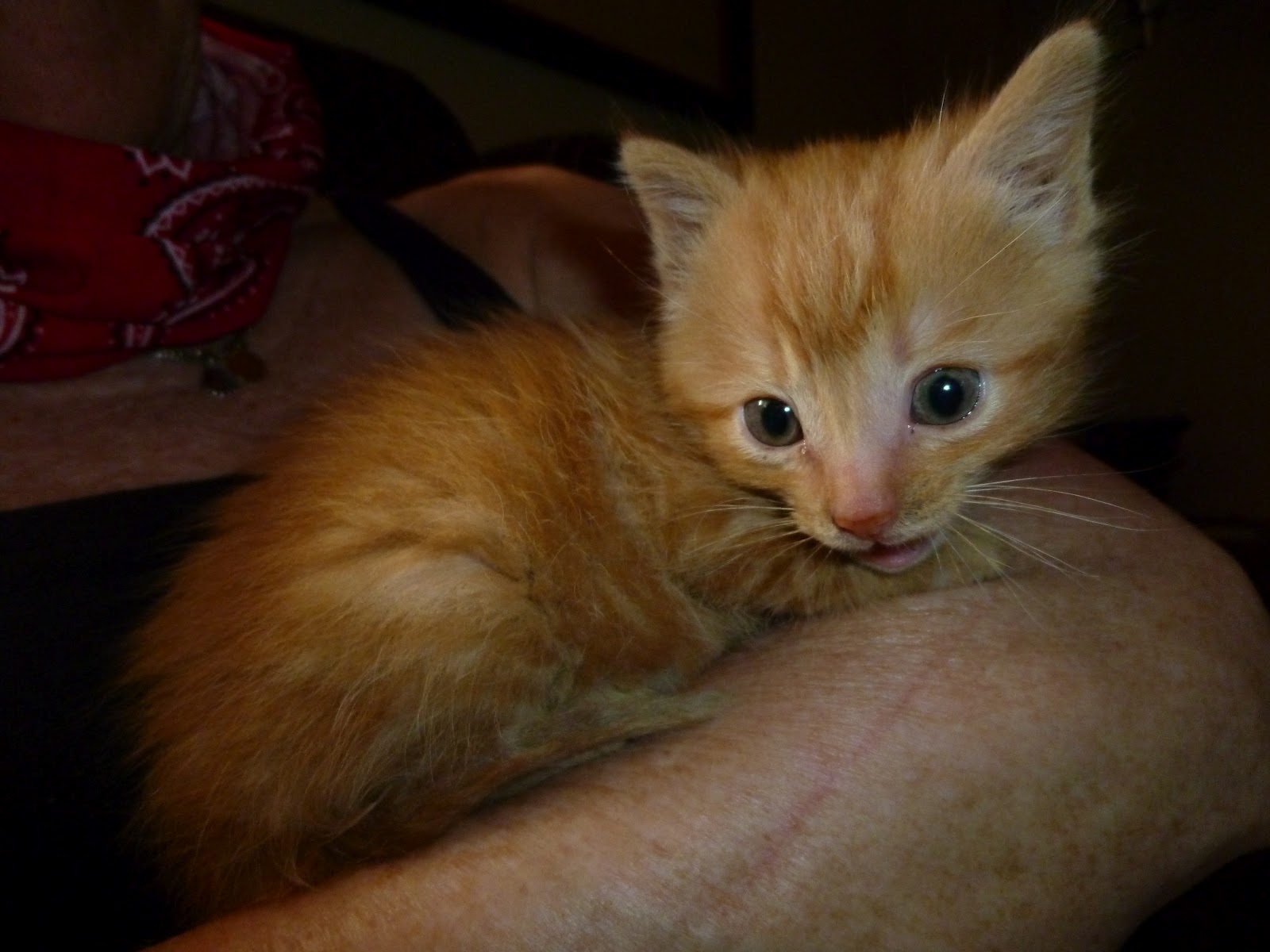
In Sahagun we were given a tiny, three-week-old kitten a friend had fished out of the River Cea. We called him Moses, or Mo for short. He crawled up onto Paddy´s shoulder and has stayed there since, like a pirate´s parrot.
 |
| Moses "Momo" O´Gara |
"The Moorish Whore," my novel of Zaida, was finished and edited and sent off to the formatters. It is a matter of moments before it appears on Kindle, then on Amazon.com. I will be sure to let you know when it´s available, so you can tell all your friends, too.
Kathy, my good friend, arrived on the ninth, and we took off for Portugal soon after, to meet up with Filipe, my other good friend. We started walking from Vila do Conde, on the Portuguese coast, about two weeks ago. It feels like forever ago.
That path up the beach is supposed to be a camino to Santiago. Following a coast might seem like a no-brainer, but it proved a lot harder than it first appeared. There are sea-walls on coasts, and long spits of land sticking out into the water that needlessly increase your mileage. There are sewage treatment plants, and private golf courses, campgrounds, rivers, and impassible mountains of rocks. You cannot follow the beach. You have to cut inland now and then. And once you leave the beach, it is often devilishly difficult to find your way back there. There are directional arrows, way too many of them, in several colors -- all of them pointing some version of north.
 |
| a ria (a wide river-mouth) |
Good thing there are lots of wonderful fish restaurants, and shellfish fisheries, and fishermen and fishwives and regular people all along the way. And places to stay -- resort hotels that must´ve been all the rage in about 1962, with mattresses of the same vintage. Between thefields of potatoes and spinach were a couple of good-size towns full of dignified old buildings, lace-makers, contemporary sculptors, filmmakers´ studios, even... and tatty old hostels. One, in Viana do Castelo, was downright comical, with a picture of a sassy girl in folklore costume hung strategically to cover a gaping hole in the wall. We were too tired to care. We slept anyway, with doves cooing outside the window, and motos roaring in the street below, and the ships down in the ria and trains at the station up above hooting horns at one another at 5 a.m.
Alongside the Ria do Miño, outside Camiña, Kathy fell down hard. I rolled her over on the ground, and saw her right hand twisted horribly to one side, two or three fingers pointing together at a very wrong angle. After a very long time an ambulance came and took her and Filipe to a hospital, yet another place that peaked about 1962. (Filipe is Portuguese.) After 140 Euros, X-rays and a sudden grab and snap of bones, her fingers were reset in their proper places, splinted, wrapped, and taped. A simple dislocation. No big deal. The two of them took the train back to Camiña and sat along the water and sipped medicinal champagne.
 |
| roadside shrine, in someone´s yard |
By then, though, I was way up the river, on the way to Valenca and the Spanish border -- I had remembered the advice I always give to pilgrims who do not know what to do with themselves: "Pilgrims walk." It was a good 25 km. in the hot sun, up and down steep, cruel hills. I saw some splendid ducal estates, some incredible views, some fabulous displays of wildflowers. But like Paddy says, "it was worth seeing, but not worth going to see."
By the time I hit Vila Nova de Cerveira I was fried. I sat in their bus station and chatted with Joan, a young Portuguese who wants to be a Hollywood star, but is currently unemployed. He speaks no English or Spanish, but we understood one another somehow. He has a pierced nose, and a tattoo on his bicep that declares him "Prood to be Different." He made sure I got onto the right bus. I confess: I skipped forward 14 kilometers. I don´t regret it.
Me and Filipe and Kathy reconvened at the border, where our coastal camino joined up with the main Portugese path to Santiago. Suddenly there were more of us backpackers -- four hefty Estonians we dubbed "the wood-choppers," a couple of little Japanese ladies, a Canadian girl with a huge, heavy backpack and vari-colored stockings.
The path itself was, for the most part, ugly and paved. My toes blistered. Kathy soldiered on. Filipe, being young and fit, ate and drank and slept deeply, and suffered no ill effects aside from occasional fits of laughter and song.
 |
| Filipe at San Telmo´s bridge, near Tui |
We enjoyed each other, and did not hesitate to enjoy the delicacies the region offered up: oysters, Albariño and Ribeiro and Valdeorras wines, razor clams, sea bass, spinach and new potatoes from the fields around us, where the harvest was in full swing. In Pontevedra we met up with two Aussies who opened their borrowed house to us, a place with a five-star view and a private room for each of us -- and a washing machine! True deluxe!
In Caldas de Reis we stayed at a Victorian spa hotel, "took the waters" in a mosaic calderium, and wandered in our white robes through the little bamboo forest out back. It did us a world of good. (Outside our window a bearded old drunk in the brown robe of a professional pilgrim shouted at us, accused us of driving a car up the camino, of being false pilgrims. I asked him how far he had walked that day, that I hadn´t seen him anywhere on the trail. He told me he did not understand German. Then he passed out on a bench. And so Filipe got to see his first Dark Pilgrim...)
The next night we stayed at a ratbag with an overpriced, deceptive dinner menu. We dubbed it "Alfonso´s Shakedown Shack," and shook the dirt from our shoes as we departed. We were in Santiago within a couple of hours, hugging the apostle, meeting up with old friends from Scotland and America and Norway and Spain. Filipe and Kathy repented at length for the dodgy pork chops they´d eaten the day before (I had the fish), but the swinging huge botafumeiro incense-burner at the cathedral, and afterward the mystical flaming quemada, an after-dinner firewater ritual, made everything alright.
 |
| Three amigos |
Yesterday morning our threesome broke apart at the Santiago railway station. I returned home to a transformed patio (still full of bashing, grinding, shouting workers), overjoyed dogs, an overgrown back garden, and an Irish pilgrim keen to dissect the mysteries of the Templar Knights, and a husband with a little marmalade kitten on his head.
I took a nap. In clean sheets. In my very own bed.
Santiago notwithstanding, my camino-walking days always bring me here here. This is better than anything else in the whole world.
Except maybe writing. And a fresh oyster.
There are lots more (and probably better) photos of this trip, taken by Filipe and posted on Facebook: https://www.facebook.com/photo.php?fbid=10150890374368260&set=a.10150890362598260.434963.774868259&type=3&theater
Friday, 4 May 2012
Gifts
Like many of my friends, Miguel Angel is an exceptional man. He´s a Freudian analyst, in a world where everyone knows (or thinks they know) all about Sigmund Freud, but almost nobody actually practices what the old man preached.
Miguel Angel was born in central Mexico. He grew up and became an accountant, just like his family thought he should. Then he realized accounting is boring, and he went to school to study Freudian analysis. In Paris. Then he realized he liked Paris better than Mexico, so he finished his doctorate, mastered French, landed a job, and left behind everything he used to be. Then he fell in love with a French woman.
The woman´s name is Nathalie. Her family is from Cognac, the same place the fine fortified wine comes from. She and her cousins and relatives own a big old house and vineyards. They make their own brandy. It´s an old family, respected and respectable.
Miguel Angel is younger than Nathalie. He is an immigrant, with dark skin and an accent. He doesn´t even like wine. At Christmas last year he and Nathalie went to the big family gathering at the Big House, where Grandmaman presided.
Grandmaman was dying. This would be her final Christmas among them, everybody knew. It was not the best time to bring a strange new man into the fold, but there was little choice. Miguel Angel was prepared to keep his head down, to stay well out of the way. But it was not to be.
The table was set with the best linen and china. The candles were lit, and the old lady seated at the head of the table. The family filed in to take their places. Grandmaman laid her hand on the chair to her right, and singled-out Miguel with a glance like a razor.
"This is the place for you," she told him. "Sit here with me. I want to know you," she said. "You pour."
He filled her wine glass. He sat.
"She touched my hands. She laughed. She made me welcome," Miguel Angel said. "She was beautiful. She made me feel so honored to sit there by her."
He´d left his own wineglass empty, but the old lady filled it with the same Côtes de Rhone everyone else was starting with. When Grandmaman lifted hers in a toast, Miguel Angel joined in. It was only a sip, only polite, he said.
"But that wine... It was amazing," he said. "The flavor rolled over my tongue, and filled my mouth, and the scent rose up into my nose from there, and... I had never tasted anything so amazing before! I had tasted wine before, and didn´t like it, really. But this was, well -- I realized this was what everyone was always on about, what wine was."
And with that he poured out another glass of Sancerre, from the carafe on the table between us. "This was a gift from Granmaman to me," he said. "She made me welcome. And wine, too, is a gift. I can share this beautiful taste now, when I am with my friends." We touched glasses, and toasted the generous old lady, now gone to the vineyards beyond. We filled our senses with the flavor and scent of kindness.
We walked down the hill, past his university, past the tourist throngs outside Notre Dame cathedral, to a place with exquisite oysters, fished that morning from the waters of Utah Beach in Normandy, presented with great drama on drifts of dry ice and seaweed. We each had two. Any more would have been too much.
When we said goodbye, Miguel Angel gave me a box with "1971" scribbled on it. There´s a bottle inside. It´s "Napoleon," he said. Cognac. From Nathalie´s family´s supply.
Gifts. Delicious, rare gifts.
Did I tell you Miguel Angel is an exceptional man?
Miguel Angel was born in central Mexico. He grew up and became an accountant, just like his family thought he should. Then he realized accounting is boring, and he went to school to study Freudian analysis. In Paris. Then he realized he liked Paris better than Mexico, so he finished his doctorate, mastered French, landed a job, and left behind everything he used to be. Then he fell in love with a French woman.
The woman´s name is Nathalie. Her family is from Cognac, the same place the fine fortified wine comes from. She and her cousins and relatives own a big old house and vineyards. They make their own brandy. It´s an old family, respected and respectable.
Miguel Angel is younger than Nathalie. He is an immigrant, with dark skin and an accent. He doesn´t even like wine. At Christmas last year he and Nathalie went to the big family gathering at the Big House, where Grandmaman presided.
Grandmaman was dying. This would be her final Christmas among them, everybody knew. It was not the best time to bring a strange new man into the fold, but there was little choice. Miguel Angel was prepared to keep his head down, to stay well out of the way. But it was not to be.
The table was set with the best linen and china. The candles were lit, and the old lady seated at the head of the table. The family filed in to take their places. Grandmaman laid her hand on the chair to her right, and singled-out Miguel with a glance like a razor.
"This is the place for you," she told him. "Sit here with me. I want to know you," she said. "You pour."
He filled her wine glass. He sat.
"She touched my hands. She laughed. She made me welcome," Miguel Angel said. "She was beautiful. She made me feel so honored to sit there by her."
He´d left his own wineglass empty, but the old lady filled it with the same Côtes de Rhone everyone else was starting with. When Grandmaman lifted hers in a toast, Miguel Angel joined in. It was only a sip, only polite, he said.
"But that wine... It was amazing," he said. "The flavor rolled over my tongue, and filled my mouth, and the scent rose up into my nose from there, and... I had never tasted anything so amazing before! I had tasted wine before, and didn´t like it, really. But this was, well -- I realized this was what everyone was always on about, what wine was."
And with that he poured out another glass of Sancerre, from the carafe on the table between us. "This was a gift from Granmaman to me," he said. "She made me welcome. And wine, too, is a gift. I can share this beautiful taste now, when I am with my friends." We touched glasses, and toasted the generous old lady, now gone to the vineyards beyond. We filled our senses with the flavor and scent of kindness.
We walked down the hill, past his university, past the tourist throngs outside Notre Dame cathedral, to a place with exquisite oysters, fished that morning from the waters of Utah Beach in Normandy, presented with great drama on drifts of dry ice and seaweed. We each had two. Any more would have been too much.
When we said goodbye, Miguel Angel gave me a box with "1971" scribbled on it. There´s a bottle inside. It´s "Napoleon," he said. Cognac. From Nathalie´s family´s supply.
Gifts. Delicious, rare gifts.
Did I tell you Miguel Angel is an exceptional man?
Subscribe to:
Posts (Atom)