Monday, 28 May 2012

Moorish, Whorish Day!

cover by Kim Narenkavicius, from an 11th c. Beatus


A thousand years ago in Spain, Islam and Christianity collided over the lush lands that once were Al-Andaluz.

Princess Zaida was a pawn, plucked as a prize of war from the palace of the poet-king of Sevilla. She sacrificed her name, her faith and her family in a single day to make a marriage of deceit with Alfonso, the passionate Christian king of Castilla and Leon.


As Doña Isabel she was kept in a cell at San Facund, the cold monastic heart of Castilla and Leon -- a delightful toy for the king, and an affront to Abbot Bernardo, an ambitious Frenchman determined to purge this "Moorish whore" from his holy fiefdom. Left alone while the king went to war, Zaida learned to be wily as a bishop in order to survive -- and eventually to disappear.


Years later, hidden in a remote cloister, Sister Mary Isabel wrote her story in documents that were hidden for centuries in the stones of a mountain monastery -- documents that became "The Moorish Whore."


Based on a true story, spiced with poems and tales from the golden age of Islamic Spain, "The Moorish Whore" is a sweeping adventure from a place and time almost lost to history.


The day finally has arrived! After much time, effort, fun, and money, The Moorish Whore, my first published novel, is now posted to Smashwords, Amazon Kindle, and Barnes & Noble. Within 24 hours or so, she´ll be available for download to e-readers of all makes and models. And soon as I can find a graphics person willing to take on the relatively small but rather onerous task of making a paperback cover, Zaida will debut in real book form, on Amazon CreateSpace´s "print on demand" platform.

For a mere $5.99, you can have a Moorish Whore of your own, conveniently folded into your e-reader or splashed across the screen of your Mac or PC or Android! 

Her story first appeared online about six hours ago. I told everyone on Facebook right away. A lot of people hit their "Like" buttons. Five people downloaded a free sample. One person actually bought one! Woohoo!

If I was a wily electronic author I would have a book-related website all set up and ready, with instant links to places to buy the thing, maps, pictures, and lots of links. I really like that idea, but I do not know how to make it happen, and I don´t have any IT wizards nearby to do it for me. (It´s hard enough getting a book cover done up!)

Still, I have a big FB network, and I have this blog, and I have you, my faithful few followers. If you like this blog I very much hope you will read this book -- I am very proud of it, it is one of the best bits of writing I have done, ever. And if you like the story, I would ask you to write a short review, telling why, on Amazon or Smashwords or GoodReads. Especially on GoodReads! So I guess I oughtta get over there to GoodReads and start spreading the Moorish Whore around, eh? So to speak!

Meantime, while you wait for the paperback release, you can get one of the first downloads by clicking here.

Friday, 25 May 2012

This Year´s Camino


Filipe and Kathy, on the beach of Esposende, Portugal

Yes, I am very far behind. Or ahead, depending on how you look at things.

Since I last wrote, work began on a major overhaul at The Peaceable. Our patio, the heart of the house, is being rebuilt, with tons of concrete, tiles, dust and racket happening almost every day. The filthy big spruce tree and the grubby, leaky, mossy sheep trough are gone. And my beloved ivy arch, (alas!) will likely not be seen again. Work continues. I am not sure about all this now, but it is too late for regrets. (I will post Before/During/After pictures, soon as there is an After.)

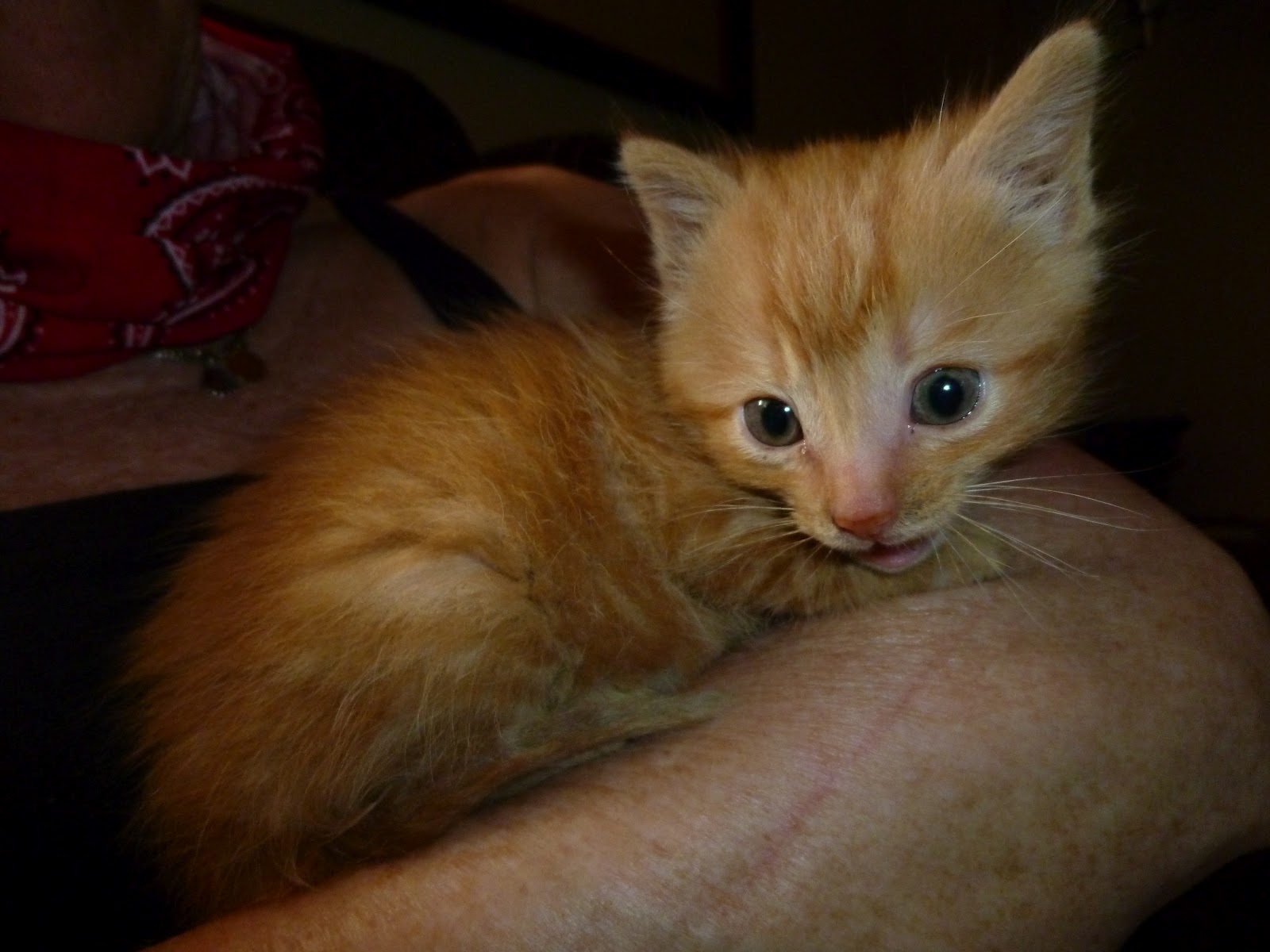
In Sahagun we were given a tiny, three-week-old kitten a friend had fished out of the River Cea. We called him Moses, or Mo for short. He crawled up onto Paddy´s shoulder and has stayed there since, like a pirate´s parrot. 
Moses "Momo" O´Gara

"The Moorish Whore," my novel of Zaida, was finished and edited and sent off to the formatters. It is a matter of moments before it appears on Kindle, then on Amazon.com.  I will be sure to let you know when it´s available, so you can tell all your friends, too. 

Kathy, my good friend, arrived on the ninth, and we took off for Portugal soon after, to meet up with Filipe, my other good friend. We started walking from Vila do Conde, on the Portuguese coast, about two weeks ago. It feels like forever ago.

That path up the beach is supposed to be a camino to Santiago.  Following a coast might seem like a no-brainer, but it proved a lot harder than it first appeared. There are sea-walls on coasts, and long spits of land sticking out into the water that needlessly increase your mileage. There are sewage treatment plants, and private golf courses, campgrounds, rivers, and impassible mountains of rocks. You cannot follow the beach. You have to cut inland now and then. And once you leave the beach, it is often devilishly difficult to find your way back there. There are directional arrows, way too many of them, in several colors -- all of them pointing some version of north.
a ria (a wide river-mouth)

Good thing there are lots of wonderful fish restaurants, and shellfish fisheries, and fishermen and fishwives and regular people all along the way. And places to stay -- resort hotels that must´ve been all the rage in about 1962, with mattresses of the same vintage. Between thefields of potatoes and spinach were a couple of good-size towns full of dignified  old buildings, lace-makers, contemporary sculptors, filmmakers´ studios, even... and tatty old hostels. One, in Viana do Castelo, was downright comical, with a picture of a sassy girl in folklore costume hung strategically to cover a gaping hole in the wall. We were too tired to care. We slept anyway, with doves cooing outside the window, and motos roaring in the street below, and the ships down in the ria and trains at the station up above hooting horns at one another at 5 a.m.

Alongside the Ria do Miño, outside Camiña, Kathy fell down hard. I rolled her over on the ground, and saw her right hand twisted horribly to one side, two or three fingers pointing together at a very wrong angle. After a very long time an ambulance came and took her and Filipe to a hospital, yet another place that peaked about 1962. (Filipe is Portuguese.) After 140 Euros, X-rays and a sudden grab and snap of bones, her fingers were reset in their proper places, splinted, wrapped, and taped. A simple dislocation. No big deal. The two of them took the train back to Camiña and sat along the water and sipped medicinal champagne.
roadside shrine, in someone´s yard

By then, though, I was way up the river, on the way to Valenca and the Spanish border -- I had remembered the advice I always give to pilgrims who do not know what to do with themselves: "Pilgrims walk." It was a good 25 km. in the hot sun, up and down steep, cruel hills. I saw some splendid ducal estates, some incredible views, some fabulous displays of wildflowers. But like Paddy says, "it was worth seeing, but not worth going to see."

By the time I hit Vila Nova de Cerveira I was fried. I sat in their bus station and chatted with Joan, a young Portuguese who wants to be a Hollywood star, but is currently unemployed. He speaks no English or Spanish, but we understood one another somehow. He has a pierced nose, and a tattoo on his bicep that declares him "Prood to be Different."  He made sure I got onto the right bus. I confess: I skipped forward 14 kilometers. I don´t regret it. 

Me and Filipe and Kathy reconvened at the border, where our coastal camino joined up with the main Portugese path to Santiago. Suddenly there were more of us backpackers -- four hefty Estonians we dubbed "the wood-choppers," a couple of little Japanese ladies, a Canadian girl with a huge, heavy backpack and vari-colored stockings.   

The path itself was, for the most part, ugly and paved. My toes blistered. Kathy soldiered on. Filipe, being young and fit, ate and drank and slept deeply, and suffered no ill effects aside from occasional fits of laughter and song.
Filipe at San Telmo´s bridge, near Tui

We enjoyed each other, and did not hesitate to enjoy the delicacies the region offered up: oysters, Albariño and Ribeiro and Valdeorras wines, razor clams, sea bass, spinach and new potatoes from the fields around us, where the harvest was in full swing. In Pontevedra we met up with two Aussies who opened their borrowed house to us, a place with a five-star view and a private room for each of us -- and a washing machine! True deluxe!

In Caldas de Reis we stayed at a Victorian spa hotel, "took the waters" in a mosaic calderium, and wandered in our white robes through the little bamboo forest out back. It did us a world of good. (Outside our window a bearded old drunk in the brown robe of a professional pilgrim shouted at us, accused us of driving a car up the camino, of being false pilgrims. I asked him how far he had walked that day, that I hadn´t seen him anywhere on the trail. He told me he did not understand German. Then he passed out on a  bench. And so Filipe got to see his first Dark Pilgrim...) 

The next night we stayed at a ratbag with an overpriced, deceptive dinner menu. We dubbed it "Alfonso´s Shakedown Shack," and shook the dirt from our shoes as we departed. We were in Santiago within a couple of hours, hugging the apostle, meeting up with old friends from Scotland and America and Norway and Spain. Filipe and Kathy repented at length for the dodgy pork chops they´d eaten the day before (I had the fish), but the swinging huge botafumeiro incense-burner at the cathedral, and afterward the mystical flaming quemada, an after-dinner firewater ritual, made everything alright.
Three amigos

Yesterday morning our threesome broke apart at the Santiago railway station. I returned home to a transformed patio (still full of bashing, grinding, shouting workers), overjoyed dogs, an overgrown back garden, and an Irish pilgrim keen to dissect the mysteries of the Templar Knights, and a husband with a little marmalade kitten on his head.

I took a nap. In clean sheets. In my very own bed.
Santiago notwithstanding, my camino-walking days always bring me here here. This is better than anything else in the whole world.

Except maybe writing. And a fresh oyster.

There are lots more (and probably better) photos of this trip, taken by Filipe and posted on Facebook:  https://www.facebook.com/photo.php?fbid=10150890374368260&set=a.10150890362598260.434963.774868259&type=3&theater

Friday, 4 May 2012

Gifts

Like many of my friends, Miguel Angel is an exceptional man. He´s a Freudian analyst, in a world where everyone knows (or thinks they know) all about Sigmund Freud, but almost nobody actually practices what the old man preached.

Miguel Angel was born in central Mexico. He grew up and became an accountant, just like his family thought he should. Then he realized accounting is boring, and he went to school to study Freudian analysis. In Paris. Then he realized he liked Paris better than Mexico, so he finished his doctorate, mastered French, landed a job, and left behind everything he used to be. Then he fell in love with a French woman.

The woman´s name is Nathalie. Her family is from Cognac, the same place the fine fortified wine comes from. She and her cousins and relatives own a big old house and vineyards. They make their own brandy. It´s an old family, respected and respectable. 

Miguel Angel is younger than Nathalie. He is an immigrant, with dark skin and an accent. He doesn´t even like wine. At Christmas last year he and Nathalie went to the big family gathering at the Big House, where Grandmaman presided.

Grandmaman was dying. This would be her final Christmas among them, everybody knew. It was not the best time to bring a strange new man into the fold, but there was little choice. Miguel Angel was prepared to keep his head down, to stay well out of the way. But it was not to be.

The table was set with the best linen and china. The candles were lit, and the old lady seated at the head of the table. The family filed in to take their places. Grandmaman laid her hand on the chair to her right, and singled-out Miguel with a glance like a razor.

"This is the place for you," she told him. "Sit here with me. I want to know you," she said. "You pour."

He filled her wine glass. He sat.

"She touched my hands. She laughed. She made me welcome," Miguel Angel said. "She was beautiful. She made me feel so honored to sit there by her."

He´d left his own wineglass empty, but the old lady filled it with the same Côtes de Rhone everyone else was starting with. When Grandmaman lifted hers in a toast, Miguel Angel joined in. It was only a sip, only polite, he said.  

"But that wine... It was amazing," he said. "The flavor rolled over my tongue, and filled my mouth, and the scent rose up into my nose from there, and... I had never tasted anything so amazing before! I had tasted wine before, and didn´t like it, really. But this was, well -- I realized this was what everyone was always on about, what wine was."

And with that he poured out another glass of Sancerre, from the carafe on the table between us. "This was a gift from Granmaman to me," he said. "She made me welcome. And wine, too, is a gift. I can share this beautiful taste now,  when I am with my friends." We touched glasses, and toasted the generous old lady, now gone to the vineyards beyond. We filled our senses with the flavor and scent of kindness.

We walked down the hill, past his university, past the tourist throngs outside Notre Dame cathedral, to a place with exquisite oysters, fished that morning from the waters of Utah Beach in Normandy, presented with great drama on  drifts of dry ice and seaweed. We each had two. Any more would have been  too much.

When we said goodbye, Miguel Angel gave me a box with "1971" scribbled on it. There´s a bottle inside. It´s "Napoleon," he said. Cognac. From Nathalie´s family´s supply.

Gifts. Delicious, rare gifts.

Did I tell you Miguel Angel is an exceptional man?  

Friday, 27 April 2012

Paris

It is half past midnight on a Friday morning, and I am in Paris.

Paris is beautiful. It is true what they say about the sunlight here, it is unique, especially when rainclouds are hanging around.  It is the center of a great and liberal society, the flashpoint of revolutions, a cradle of history, etc. etc. Paris has every kind of store, restaurant, sex, music, and entertainment you might want, anytime, delivered to your door if you have ready cash.

But then so does New York and Tokyo and London and Berlin. And probably Moscow by now, if you are a plutocrat.

I am not a fan of cities. I understand the city is where all the great artworks and architecture and enginaeering and genius is gathered up. I appreciate that. Cities are nice places to visit, but I would never again want to live in one. I  have trouble, literally, breathing in cities -- the air is filthy. There are more people everywhere, which means there is more trouble, fashion, excrement, ugliness, bullshit, and amazing-ness everywhere too. The noise stresses me. It is never truly silent in a city, not even in a good hotel, in a single room that looks into a garden. And so I do not often come to cities, unless I am on my way from there to some other rural place.

I came to Paris to make peace with an old friend, and to bring some artwork to a new friend. I will only be here for four days. It is a fine and sunny mission that brings me here, and I am seeing Paris with new eyes. I am relaxed. I am not staying in anybody´s house, so I can make my own plans and go where I want to go, and stay as long as I want. I feel comfortable enough with the subways and money, museums and languages that I can get around and get fed and watered without undue stress. (I am staying at a Spanish hotel, after all.)

Today I did my morning visits, and headed out after lunch to see Notre Dame cathedral. I was there once before, so I changed my mind once I got on the train, and instead went to Pere Lachaise, a huge Victorian cemetery on the wild and woolly eastern end of the city. When it started to rain I went back to my hotel, where seeing it was Spanish, I took a siesta. It was total holiday vacation for me, a person whose whole life, by some peoples´ lights, is a holiday vacation. Because it was what I wanted to do, where I wanted to do it, and when I felt I wanted it done. No one else to worry about or fuss over or satisfy, nobody to be upset when I changed my mind and switched plans mid-stream. Amazing how relaxing it is, being in no one´s company but my own!  

Somehow I think women will understand this better than men will.

Still, nice as it is in Paris, if it were not for my friends, I would not come at all. If it were not for their knowledge of cheeseburger restaurants and Lebanese spinach crepes, the Leonardo DaVinci picture that´s only on loan at the Louvre through June, the sweetness and light of the smile on my godson´s little face... well. I would have to spend my life Paris-free. Paris would have to go on without me.

Alas, at least one of us would be the poorer for it! 

Wednesday, 18 April 2012

Hobo Road

He is at least 45 years old, but he is a homeless child. He´s walking without high-tech, ultralite backpacks or hiking staffs, or even shoes that fit. He´s got no money. He speaks only Portuguese. He asked for children´s books, and pored over the pictures. I had to put his name in the register for him, as he cannot write. He assembled the toy train and made choo-choo sounds along the floor. He is from Braga, Portugal, he said. He is walking the camino to Lourdes, alone.
He is José, pronounced "Cho-say," the Portuguese way. He was a high-maintenance pilgrim. He never stopped talking, and we only understood some of what he said. He needed things -- a razor, so he could  shave. A towel. He needed a t-shirt. When we offered to launder his things, he overloaded the machine with his sleeping bag, coat, flannel shirt, pajama bottoms. I split the laundry into two loads and he panicked, thinking I was taking away his belongings. 

He ate voraciously. He had eaten nothing but cookies for the past two days.
He is walking the camino backward, west to east. His shoulders sagged under the straps of his cheap sports bag, his hands weighed down by plastic shopping bags. He was small and feral. Most of his teeth were  gone. He needed a haircut.

He didn´t look like a pilgrim, but deep inside his bag he had a valid pilgrim credential. He can stay in pilgrim shelters, but most of them charge a nominal fee. If he does not have even that, he sleeps wherever he can find a space out of the rain.
His fellow pilgrims do not always find him worthy company. A week or so ago, José rolled into a town near Astorga with his sneakers and shopping bags, and stepped up to register at the pay-by-donation pilgrim shelter. A couple stopped him at the door. Where were his hiking boots, his proper backpack? they asked. Why was he walking the wrong way? He was a bum, a fake. This was a place for real pilgrims only. He´d have to move along.

And so he did. He slept in the churchyard. It was not so bad, he said. 
"He´s a bum," one of the neighbors said when José showed up at the after-Mass Vermut on Sunday, asking for a place to stay. "With a pilgrim hostel and an albergue here now, the pilgrims aren´t going to make it to your house. They´re going to send you the bums. Bums and freeloaders."
José was a bum, and so was Jan, a ragged Czech who stayed last week. They are homeless and jobless, wandering the road because there is no other place for them. Given an opportunity, they ask for what they need (Wily Antonio, another Portuguese drifter, shows up here every few months with a wish list!). If nobody gives them food and a bed for the night, they sleep outdoors and eat meals of cheap biscuits. They are poor in an honest, matter-of-fact way.
The Camino de Santiago has for centuries been a hobo road, full of drifters and hustlers. Today it´s no different. Alongside the bums are the freeloaders, pilgrims suffering a different kind of poverty -- a poverty of spirit.

Freeloaders have enough money to vacation for weeks at a time, but they gleefully consume resources designed for people who can´t afford anything else. Freeloaders take up the "donativo" bunks in the pilgrim shelter because their friends are staying there, because albergues are "integral to my camino experience." Paying little or nothing for their bed, they can spend the savings elsewhere. They sip beers at their café tables and discuss what makes an Authentic Pilgrim: Walking every step of the way. Prayers. Sacrificing personal comfort and hygiene by sleeping in scruffy pilgrim beds. 
Meantime, on the porch of the church, the bums bed down on the benches.


Monday, 9 April 2012

Holy Moley Week

Paddy, Harry, and Olaya


The party was just the beginning of my sister Beth´s elaborate plan.

Monday brought cards, letters, cards... cards from my Grandpa Scott (who is 94), Aunts Gloria, Esther, and Nancy, three women who went to high school with me, more than two dozen former pilgrims, both my sisters, and  several cousins (my cousin Barbara included a book about caring for donkeys and mules!). Sonomi sent another invitation to walk the Shikoku 88 Temples pilgrim trail in Japan. 

It was Holy Week in Spain, so mail delivery was spotty. When mail arrived, it came in plastic shopping bags! Cards, more cards, and gifts too: books, a Pittsburgh Steelers Toalla Terrible (in Spanish), a spectacular hand-knitted shawl, three kinds of curry from India, a cheddar cheese (!!!) from Australia, via England, delivered on Monday by Joe The Intern from Liverpool.

The birthday jongleurs
One other spectacle happened on April 4: Someone rang the doorbell just at dusk, and I ran down to answer it: Outside stood four grinning Spaniards. "We are here to sing Happy Birthday!" they said, and they filled up the entryway, accompanied by a shiny red accordion and a big orange sign, sort-of written in English. They sang it once in the entryway, in Galician, and again, in Castellano, in the house, so we could get a picture. I wish I had remembered my camera makes movies!

It was rather confusing to me. I only recognized two of them: One was our neighbor Milagros. Another was Luis, a restaurateur from Sahagún. The other pair I never saw before in my life, far as I know (and Paddy is not in the habit of admitting accordions into the house.) Everyone tried to explain at once. The accordion man is from Moratinos originally, his wife is somehow connected to the camino hospitalero program, and knows me from a FaceBook page. They live in A Coruña, way over in Galicia... and my sister Beth had sent an e-mail, and they were in town (with their accordion) and so why not?

Okay. I can dig this. I still don´t know how Luis got involved, but I will let that go.

When my actual birthday arrived the rain poured down. We haven´t had a decent rain here since December, so all the farmers smiled great smiles and the fields grew greener and more lush by the hour. We didn´t make it to Leon to see the great Holy Thursday processions, but me and Joe went to Mass here in Moratinos, and to Sahagun in the evening to see the penitentes parade in their pointed hoods. We went to church on Thursday and Friday, Saturday night and Sunday morning. It was glorious. We is righteous!
Serious penitentes in Sahagún

And all that churchness culminated in our little iglesia on Easter morning, where Don Santiago decided we should have our own re-enactment of "El Encuentro," a favorite Easter-day procession in towns all over Spain. The Blessed Virgin statue was bolted onto the palanquin and decked with rosemary branches. We don´t have another palanquin, or a detachable Jesus for that matter, so the priest put a sanctified host into the monstrance (a wonderfully-named silver-plated display case for holy wafers) and let it represent the Jesus image. And at the right moment, when the choir began to sing, four women took the corners of the palanquin and hoisted the BVM onto their shoulders and headed out the wide-open front gates. The virgin and all the women of the church made a left outside the door. The monstrance and the men went right.

We met in the alley by the dumpster. We set the palanquin on the ground and someone took away Mary´s black mantilla. Don Santiago turned around and led us all singing through the plaza and back into the church for the big Resurrection Mass.

The only unusual and wonderful thing about this was this year, I was one of the women who carried the Blessed Virgin. It was very heavy and unweildy. It filled my Protestant bones with fear, and set my Calvinist ancestors spinning in their graves at the sheer idolatry of it all. But my heart went pitty-pat with excitement. I felt like I had won the big prize, like I had achieved something truly worthwhile -- even thought I don´t have a purple hood, I was carrying a paso like a penitente! (Carrying a paso is something I have secretly hoped to do someday, but did not know how to achieve. I only had to wait six years!)


the penitentes of Moratinos meet Jesus in the alley

Sunday, 1 April 2012

Felicidades

Palm Sunday. Palms don´t grow here, so we brought branches of rosemary and bay leaves and pine to church, the fragrant green stuff that grows all around us. We stood in a circle on the sunny steps while Don Santiago walked among us, sprinkling the greens with holy water. These will be tucked over doorways and rear-view mirrors, a sort of good luck charm, a sign that spring happens every year, year after year.

Mass was heavily scented, herbal even. Delicious. Lots of people were there, the ones who come for holidays are back again, like the swallows in the barn. They kissed our cheeks, admired the new crop of babies. It was a smiley morning, full of sunshine and good will.

In the afternoon we went for coffee to the Ayuntamiento. I knew something was up, and my suspicions were confirmed when I opened the door to the meeting room and Sopresa! A cloud of confetti fluttered down over my head. My former English students, my neighbors, and an assortment of their friends and relations were crowded into the small room, and they burst into a chorus of  "Appy bortay to joo!"


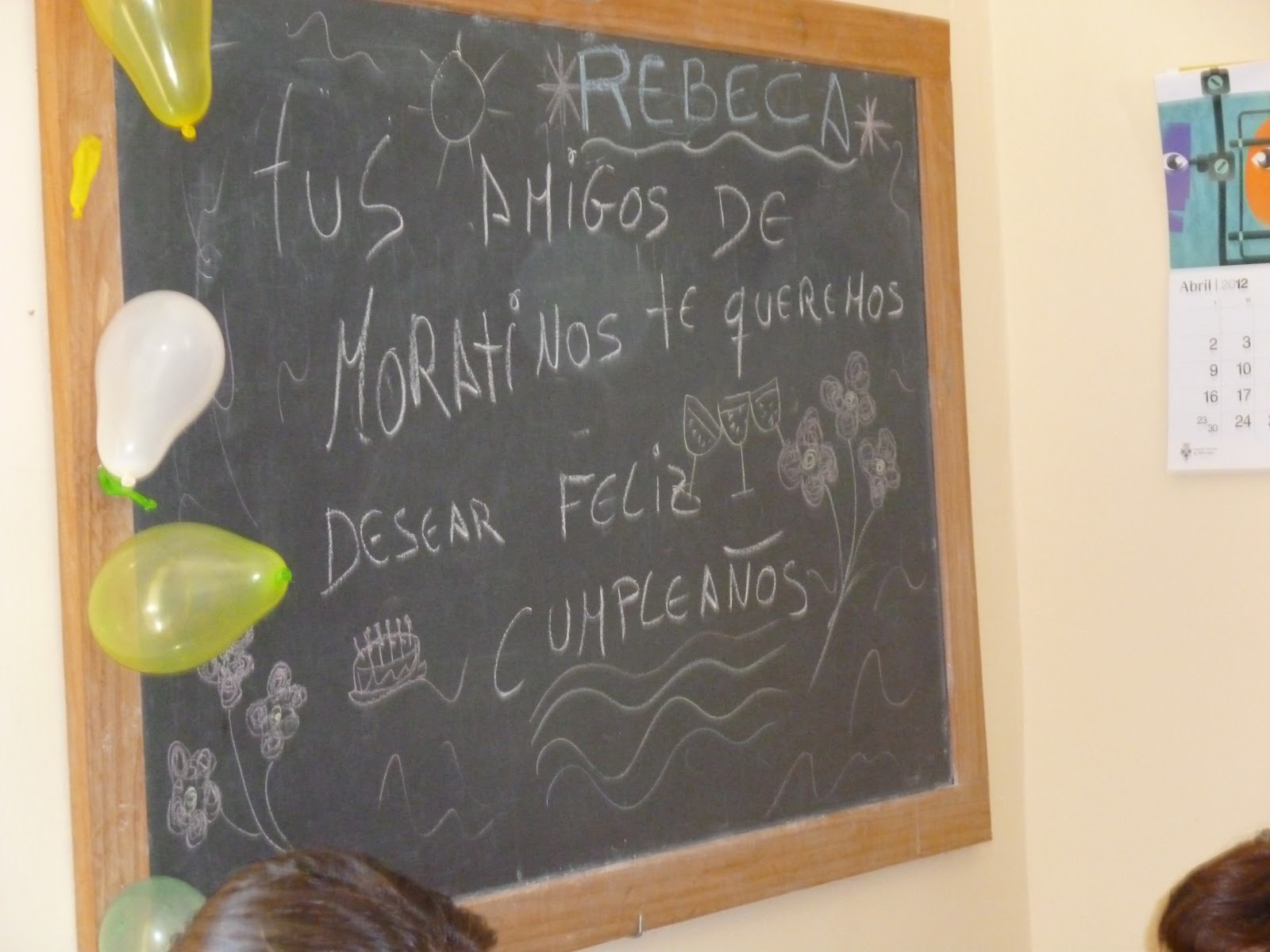
They had streamers, balloons, even a piñata loaded with candy and more confetti. There was a big bouquet, a bottle of nice cologne, a t-shirt with bugle-beads, a bottle of Valpolicella from the Italians, a bottle of Reisling from the Germans, all wrapped in jolly paper. They had six bottles of champagne and a huge cream cake with "Felicidades Rebeca" written in chocolate on top. Someone had even chalked a birthday greeting on the blackboard.

On Thursday I will be 50 years old. I don´t feel much more than about 23. Today, for an hour or so, was was 8 or 9. I was delighted! I never saw the meeting room so dressed-up for a birthday celebration, and I have been to plenty of those. Maybe it was because of the milestone birthday. Maybe because it was a surprise. Or perhaps because Paddy had Milagros do the planning -- and Milagros LOVES this sort of thing.
It made me feel very special and loved, and it made me miss my mom and sisters, who would have loved it. (I suspect my sister Beth is who told Patrick this might be a good idea. He would never, ever have thought of it himself, because he is not a birthday kind of guy.)

The best of all was seeing everybody there, even the factions of families that don´t usually mix. Everyone chatted and feasted and popped balloons and tickled the babies, and took home an extra bit of cake for breakfast tomorrow. The cleanup was monumental, but with so many hands at work we got that done in a trice. And so I can go ahead and be 50 on 5 April without disturbing the dignity reserved for Holy Thursday.

Yeah, I´ll be 50. And my neighbors like me! And I got presents!